5 Effective Skills That Will Make You a Better UI/UX Designer
Beyond design tools and pixels—the five essential human and strategic skills that separate good designers from truly exceptional ones.

A successful career in UI and UX requires developing a core set of critical skills. Stick with me as I walk through five of the habits and mindsets that have shaped me as a designer. UX design continues to be one of the most impactful roles in the creative and technology industry, and recognizing the fundamental skills a designer needs saves you from overanalyzing the wrong problems.
UI & UX designers must cultivate strong "soft skills"—aptitudes that apply across every product team and client environment—right alongside mastering technical tools, prototyping workflows, and visual craft. These include traits like empathy, curiosity, communication, and adaptability.
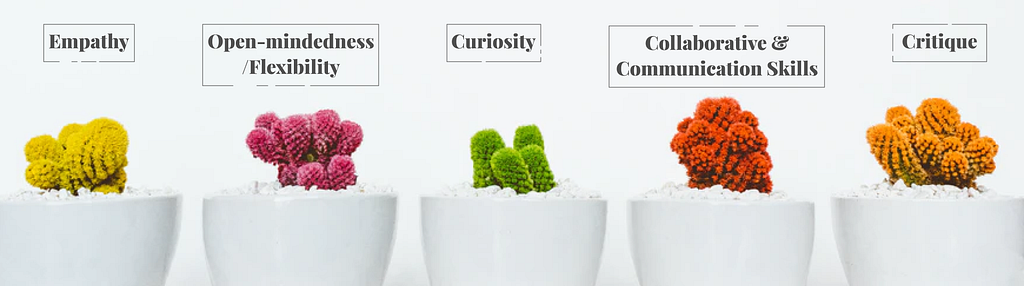
Here are five essential UX design skills every designer should sharpen:
1. Empathy

Empathy is not a new word for designers—we hear it constantly because we genuinely need it to build great products. Empathy simply means putting yourself in someone else's shoes and situation. Ask yourself: what is design really all about? Design is a discipline for solving problems visually and functionally for a specific audience. Because we communicate solutions through interfaces, we have to care deeply about our users' real needs, frustrations, and context.
When we truly comprehend someone's struggle, we can design from their perspective rather than our own assumptions. Being a keen observer sharpens empathy: when you notice people repeatedly hitting the same friction point or making the same mistake, you uncover a clear opportunity to simplify the product—even through remote research and usability observation.
2. Curiosity

Be curious—keep asking why and how. Curiosity is one of the biggest reasons I became a designer: questioning why something works the way it does and exploring better, more effective solutions. Great UI and UX design thrive on investigative thinking and uncovering fresh approaches to existing challenges.
Curiosity empowers designers to engage with founders, users, and complex product domains in meaningful ways. It leads to sharper questions, active listening, and deeper problem framing rather than surface-level decoration.
Digital product design—especially now in the era of AI-driven interfaces and rapid prototyping—evolves constantly. Staying curious keeps your craft current and adaptable.
3. Critique (How We Give and Receive Feedback)

Every form of critique, feedback, and review carries signal—because our users and teammates don't all share the exact same mental model. Treating both positive and critical feedback as useful data removes ego from the room: every critique is either a piece of information needed to understand the problem better or a clue toward the right solution.
Strong design critique builds client and stakeholder trust by letting them witness the reasoning behind decisions and understand why the product works the way it does.
When giving feedback, specificity matters. Saying "The photography on our careers page doesn't reflect our team culture—let's convey a warmer, more collaborative mood to connect with the candidates we want to attract" gives actionable direction, unlike vague comments such as "make it pop."
And when receiving feedback, set clear context around what stage the work is in, stay open-minded, and ask clarifying questions whenever a note feels ambiguous.
4. Collaboration and Communication Skills

Whether you're partnering with an early-stage startup founder or working inside a large, multi-disciplinary organization, you will communicate and collaborate daily with engineers, product managers, marketers, and stakeholders. Understanding how to articulate design rationale clearly—and how to listen to technical and business constraints—turns good mockups into shipped, high-performing products.
5. Open-Mindedness & Flexibility
Open-mindedness isn't always the first trait people mention when talking about UX design, yet it is indispensable. Narrow thinking blocks breakthrough ideas. Great designers stay open to unexpected perspectives, embrace new workflows and AI prototyping tools, and adapt calmly when product requirements evolve or user research challenges an early assumption.
Ifeanyi Ananti
Ifeanyi Ananti is a Creative Art Director, AI Product Designer, AI Prototyping Specialist, and UI/UX Designer turning complex ideas into high-performing digital products, scalable design systems, and interactive AI experiences.